The most painful kind of loss
You buy goods with your own money. They sit on the shelf. One day you find a batch past its date. You can't sell it, you can't return it, and you can't get your money back.
If you run a pharmacy, supermarket, provision store, cosmetics shop or any business that sells things with an expiry date, this loss happens quietly, and it adds up.
The good news is that almost all of it is avoidable.
Why expired stock keeps happening
- New stock is shelved in front of old stock. The old batch gets pushed to the back and forgotten.
- Nobody knows which batch is which. All cartons look the same, and dates are printed small.
- Dates live in people's heads or on scraps of paper. When a staff member leaves, the knowledge leaves with them.
- Bulk buying of slow items. A "good deal" on a large quantity becomes a loss when it doesn't sell in time.
- No regular date checks. Shelves are only checked when something smells wrong.
The rule that fixes most of it: FEFO
FEFO means First Expired, First Out. You always sell the batch that expires first, even if it arrived later.
This is different from FIFO (First In, First Out). FIFO assumes older deliveries expire earlier, which is not always true. A new delivery can sometimes have a shorter shelf life than stock already on your shelf.
FEFO needs you to know the expiry date of each batch, not just the product.
How to track expiry dates: a practical system
1. Record the expiry date when goods arrive
At the door, note the expiry date of each batch next to the quantity received. This is the best moment to capture it, because the cartons are in front of you.
2. Keep batches separate
Don't mix batches in the same space. Put older batches to the front, newer ones behind. Label clearly.
3. Set a "near expiry" window
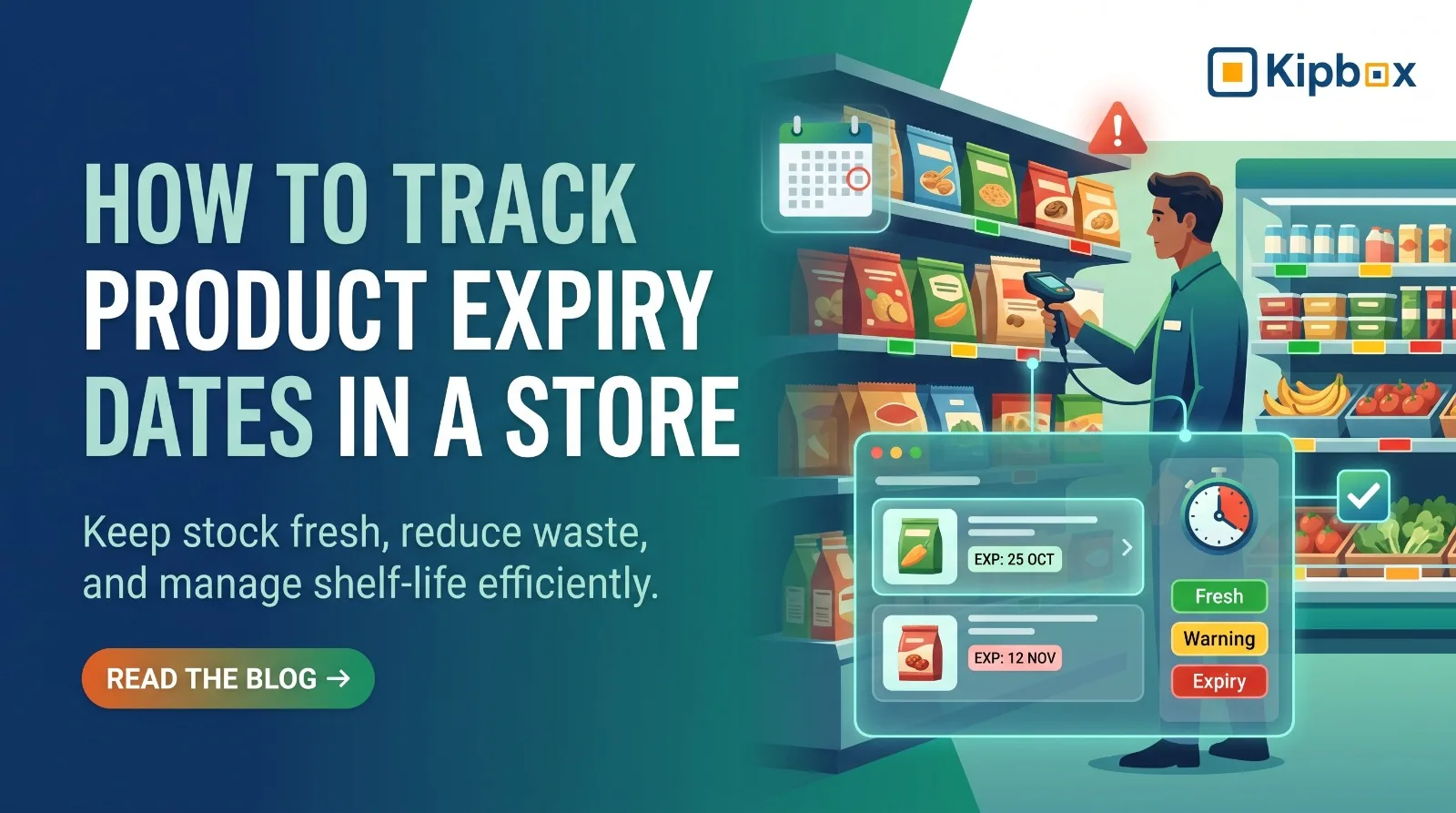
Decide how early you want a warning. For example, 90 days for medicines, 30 days for food. Anything inside the window gets attention.
4. Review near-expiry items weekly
Pick one day a week to walk through items close to their dates. Decide what to do with each one.
5. Act early on slow-moving near-expiry stock
You have options before the date passes:
- Move it to a visible position
- Offer a discount or bundle
- Ask the supplier about exchange or return terms
- Stop reordering that product in large quantities
6. Record what you throw away
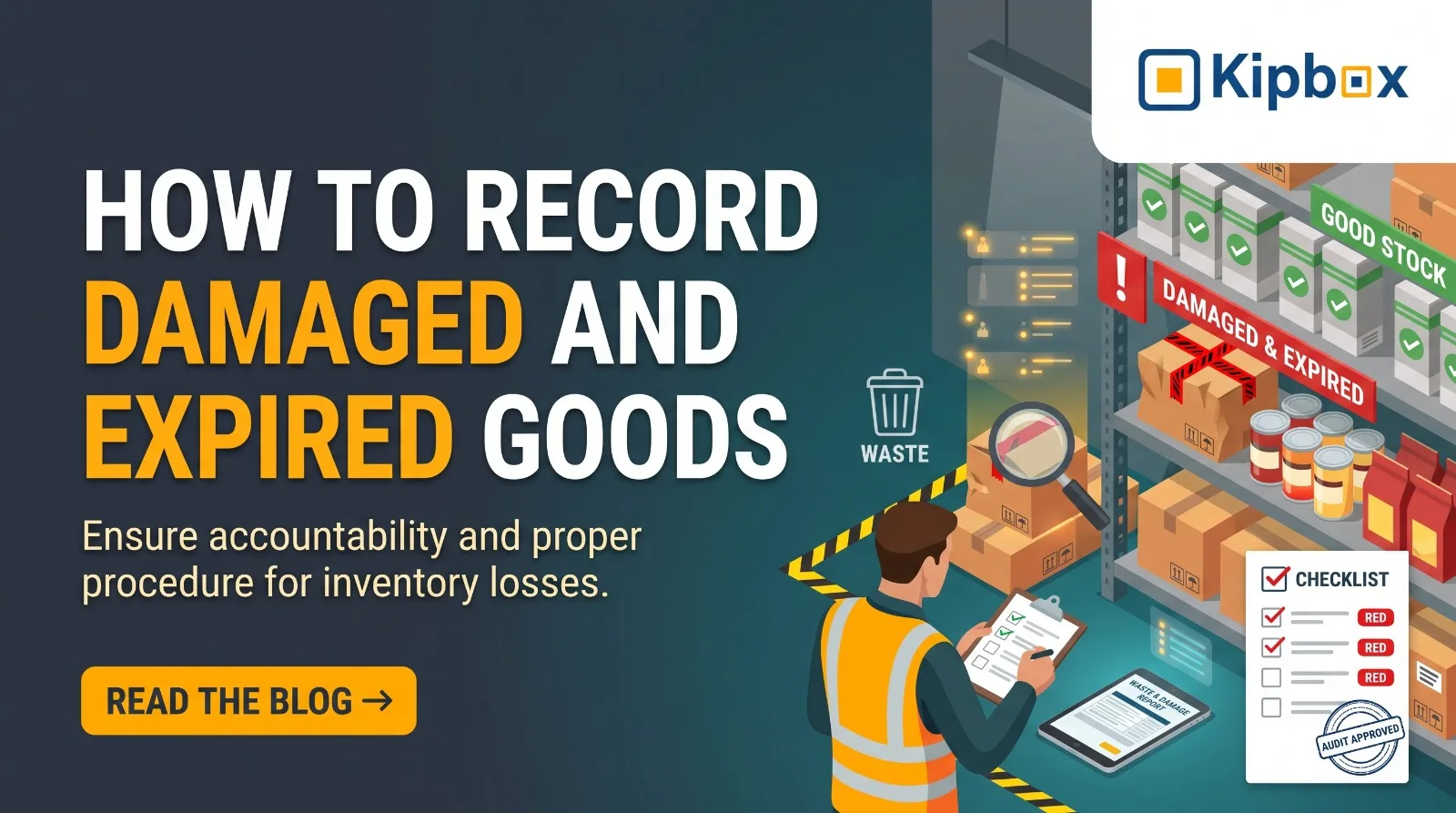
When something does expire, write it down as a loss with a reason. Otherwise it looks like theft, and you learn nothing about which products to buy less of.
What expired stock really costs
If you throw away ₦30,000 of goods every month, that is ₦360,000 a year. At a 20% margin, you'd need to sell about ₦1.8 million of extra goods to earn that back. For most small shops, preventing expiry loss is easier than finding a lot more customers.
How KipBox tracks expiry dates
KipBox includes expiry tracking for businesses that sell expirable goods. You turn it on in your settings, and it works at batch level.
- Batch and expiry on each delivery. Record expiry dates when stock comes in, so each batch has its own date.
- FEFO selling. KipBox draws from the batch that expires first, so you don't have to remember which carton to open.
- Visibility into near-expiry stock. See what is approaching its date so you can act before it becomes waste.
- Damage & Loss records. When items do expire, record them with a reason so your loss report shows the real picture.
- Works with purchase orders. Receive goods against a purchase order and capture the dates as they arrive.
This matters most for pharmacies, supermarkets, food sellers and beauty shops, where one forgotten batch can cost a lot.
Frequently asked questions
What is the difference between FIFO and FEFO? FIFO sells the oldest delivery first. FEFO sells the batch with the earliest expiry date first. FEFO is safer for anything that expires.
Can I return expired goods to my supplier? It depends on the supplier's terms. Ask before you buy, and track near-expiry stock early, since many suppliers only accept returns before the date passes.
How do I stop staff from selling expired items? Use a system that sells by batch and a routine of checking near-expiry shelves weekly. Clear labelling and a trusted person responsible for date checks both help.
Don't let your shelf become a loss
Expiry loss is not unavoidable. It is a tracking problem, and tracking problems have solutions.
Try KipBox free and turn on expiry tracking. Record your batches, sell the oldest first, and keep expired goods off your loss list.