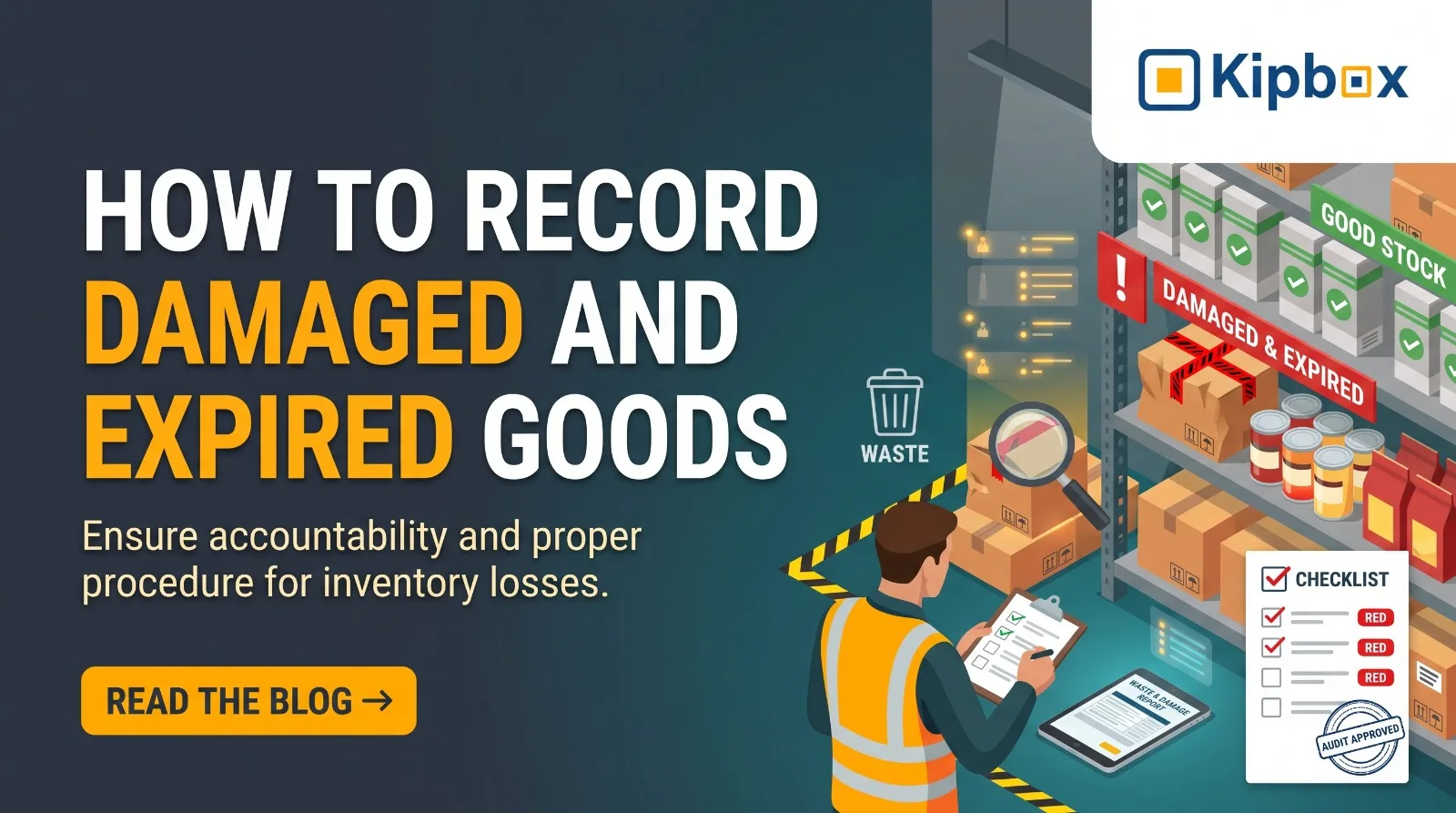
When a broken item becomes a mystery
A crate of bottles falls and breaks. A carton of biscuits gets wet in the rain. A pack of medicine reaches its date. You throw them away and carry on with your day.
A month later, your stock figure doesn't match the shelf. You wonder if someone is stealing. In truth, part of the gap is just broken or expired goods that nobody wrote down.
This is why recording losses matters. It protects your honesty with yourself, and it protects your staff from unfair suspicion.
Why you must record damaged and expired goods
1. Your profit figure will be wrong without it
If you bought stock for ₦100,000 and ₦10,000 of it was destroyed, your real cost of selling the rest is higher. Ignoring the loss makes your profit look better than it is.
2. It separates damage from theft
When losses are recorded with reasons, whatever is left unexplained is the part you need to investigate.
3. It shows you what to fix
Recording reasons over time reveals patterns:
- Lots of breakages? Look at how goods are stored or carried.
- Lots of expiry? You are buying too much of slow items.
- Lots of "unknown"? Your controls need tightening.
4. It supports supplier claims
If goods arrive damaged, a recorded loss with the date and quantity gives you evidence when you ask for a replacement or credit.
The types of loss to record separately
- Damaged: broken, crushed, spilled, water damage
- Expired: past the expiry date
- Stolen or missing: unexplained shortages
- Spoiled: perishables that went bad
- Internal use or samples: items you took or gave away
Keep them separate. If everything goes into one pile, you can't learn from it.
How to record a loss: a simple routine
1. Record it the same day. Memory fades fast. A loss written down weeks later is usually a guess.
2. Write the item, quantity and reason. "12 bottles of soft drink, broken during offloading" is useful. "Stock correction" is not.
3. Record the cost, not the selling price. A loss is what you paid for the goods, not what you hoped to sell them for.
4. Let a second person confirm larger losses. For losses above a set value, have the owner or manager sign off.
5. Review monthly. Add up losses by reason and look at the biggest category. That is where improvement will pay off most.
Mistakes to avoid
- Deleting stock quietly instead of recording a loss
- Using one vague reason for everything
- Letting the same person who handles the stock approve their own write-offs
- Throwing away goods before checking if the supplier will replace them
How KipBox records losses
KipBox includes a Damage & Loss feature built for exactly this.
- Reasons on every stock reduction. When you reduce stock for damage, expiry or loss, you record why, so the reason stays attached to the movement.
- Damage report. See your losses in one report, by reason, so you can see which kind of loss costs you most.
- Full movement history. Every loss appears in the product's Stock Movement history, with a running balance, so a loss never silently disappears.
- Permissions. Control which staff can adjust stock, so write-offs stay with trusted people.
- Honest profit. Because losses are recorded, your reports reflect what really happened.
Instead of guessing why stock is short, you see how much was damaged, how much expired, and how much is still unexplained.
Frequently asked questions
Should I record small losses? Yes. Small losses repeat. A few hundred Naira a day becomes a large amount over a year.
Is a write-off the same as theft? No. A write-off is a recorded reduction in stock for a known reason such as damage or expiry. Theft is an unexplained loss. Recording reasons keeps the two apart.
How do I reduce damage losses? Look at the pattern. Change storage, packing or handling where breakages happen most, and talk to suppliers if goods arrive damaged.
Know your losses so you can cut them
You can't control what you don't measure. Recording every loss turns "stock keeps disappearing" into clear numbers you can act on.
Start free with KipBox and record damage, expiry and loss with proper reasons, so your reports show the truth about your shop.